Chennai: The global supply chain has faced its toughest challenge of 2026, and the ripple effects are about to hit the emerging Indian electric vehicle market hard. In an exclusive market projection shared with key analysts, TVS Motor Company has indicated that TVS EV prices may rise by 10% to 12% in the March quarter (Q4) if the strategic and critical global maritime route, the Strait of Hormuz, remains blocked. This startling warning indicates a dramatic shift in market dynamics just as automakers were beginning to stabilize EV pricing following the August price corrections.
Impact of Hormuz Crisis on TVS EV Prices
The primary reason for the potential increase in TVS EV prices is the exponential rise in manufacturing and freight costs caused by severe global logistical bottlenecks. The ongoing geopolitical tension in the Middle East has constricted vital shipping lanes. For complex products like electric scooters, which rely heavily on specialized components, any delay in key raw materials like lithium-ion cells and rare earth magnets can significantly inflate production budgets.
Shipping delay indicators have reached unprecedented levels, forcing factory managers to source parts through alternative, more expensive air freight routes. The company noted that while they have attempted to absorb volatility in component costs for months, the sustained nature of the logistical bottleneck makes passing on these costs inevitable by early 2027.
Current vs. Future TVS EV Prices: A Look at Models
While the actual figure will depend on the duration of the crisis, we can project the potential impact on TVS’s core electric two-wheeler range if the 10-12% increase materializes across all variants. Below is an indicative comparison based on current average ex-showroom pricing.
| Electric Scooter Model | Current Price (Avg.) | Potential March Qtr Hike | Projected Price |
|---|---|---|---|
| TVS iQube 2.2 kWh | ₹94,999 | +₹9,500 – ₹11,400 | ₹1,04,499 – ₹1,06,399 |
| TVS iQube 3.4 kWh | ₹1,21,664 | +₹12,100 – ₹14,600 | ₹1,33,764 – ₹1,36,264 |
| TVS iQube ST | ₹1,85,373 | +₹18,500 – ₹22,200 | ₹2,03,873 – ₹2,07,573 |
Global Supply Chain Disruptions: Beyond the Hormuz Crisis
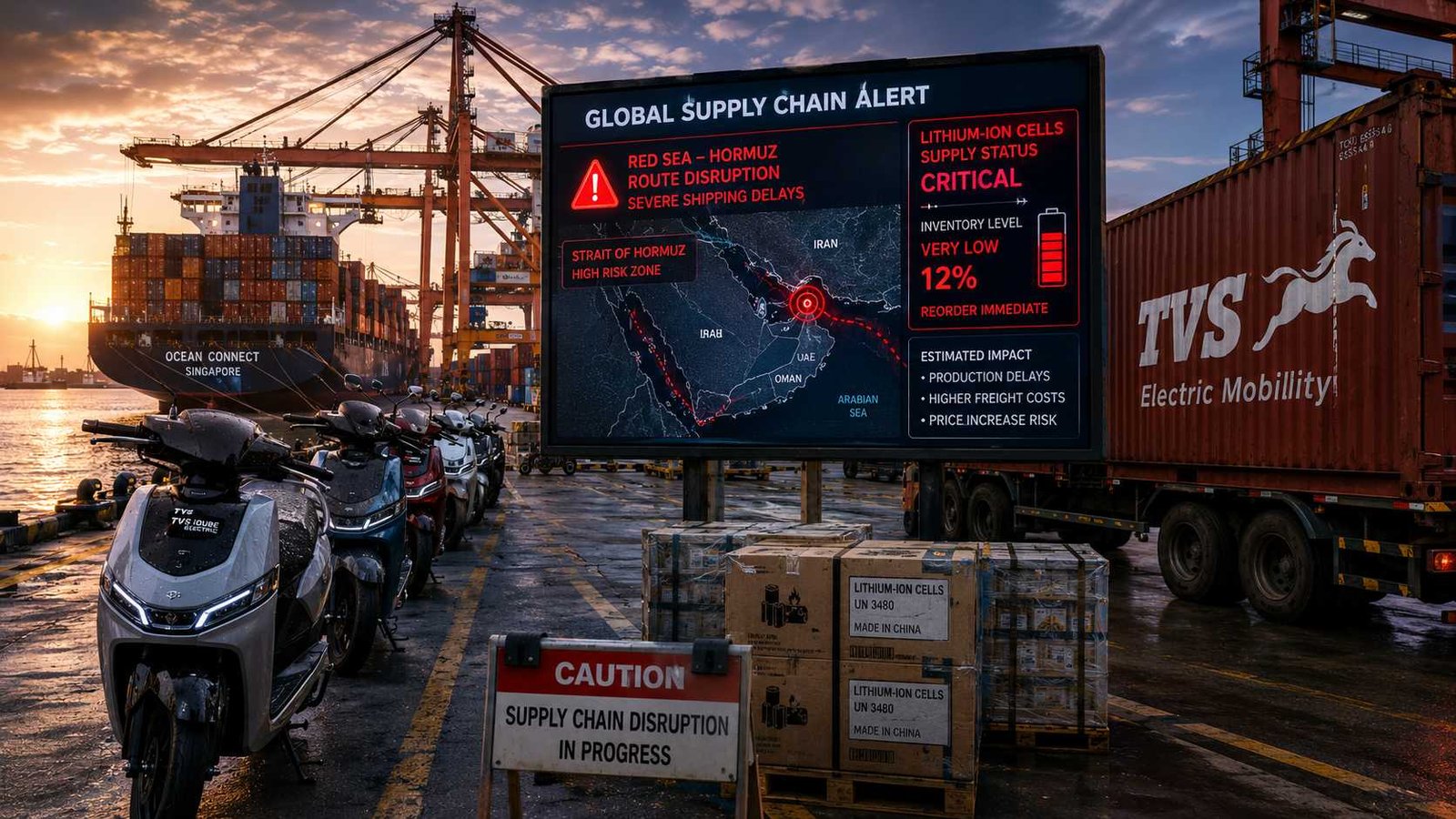
Inside a TVS manufacturing facility: Supply monitors show a global supply chain alert highlighting the Hormuz Crisis block and a scarcity of lithium-ion cells.
Industry experts highlight that the Strait of Hormuz is critical, but it is just one component of a wider system that is now struggling. The global automotive supply chain is a complex web, and any significant shock is amplified across multiple regions. Over the past three months, global container shipping index rates have jumped 45% due to the search for alternative routes. This inflation in freight costs hits India particularly hard, as most local cell manufacturing projects have yet to scale to full capacity, meaning India’s EV manufacturers are almost entirely reliant on cell imports through these constricted maritime gateways.
In a related analysis, explore the general trends in the Indian electric vehicle market, including sales projections and technological innovations, to understand the broader forces driving the industry forward. Read our complete analysis on the Indian EV Market Outlook for 2027.
To mitigate these risks, TVS and other major manufacturers are exploring diversified supply lines through terrestrial routes and investing more heavily in localized component development. However, these long-term strategies take years to scale, meaning immediate relief is unlikely to reflect in the upcoming quarter.
Geopolitical Disruptions and the Future of Affordable Mobility
The situation in Hormuz has not just impacted oil, it has also put immense pressure on global dry bulk shipping. While EVs use electricity, the global logistics for battery cells, critical magnets for the motors, and even the aluminum frames are highly dependent on reliable maritime transport through these specific regions. The cost to ship a container from Asia to Europe or India has doubled since the crisis began, affecting every item from smartphones to electric vehicles. In a separate report by a maritime tracking service, congestion at major international ports has reached its highest level since 2022.
*Chart visualizes the projected index of total manufacturing costs over multiple quarters, emphasizing the impact of the ongoing geopolitical bottleneck.
Market Analysis and Expert Opinion
Market experts are divided on the long-term outlook but agree that the short-term impact on affordability is unavoidable. While the current prices reflect a highly competitive market after recent corrections, this pending hike might cool demand slightly, but the structural shift toward electric mobility in India remains robust. It is crucial to track global oil markets, as the original shock to crude prices might have accelerated EV demand in the first place, only for the logistical consequences to threaten the affordable EV future.
For prospective EV buyers, time is of the essence. While immediate changes to TVS EV prices are unlikely to be implemented before festive offers conclude, a significant jump in costs for the new calendar year is a distinct possibility. Waiting until the March quarter to secure a new electric scooter could result in an inflated budget of ₹10,000 to ₹22,000 across the model range. Stay tuned to Daily Business News for real-time tracking of this critical story and its impact on the auto industry.