Deceptively Similar Trademark | Case Laws & Judgments | High Court Judgments | Published: 11 July 2026

A single swapped letter was not enough to save Intas Pharmaceuticals from a permanent injunction. On 28 April 2026, the Delhi High Court, in Sanofi v. Intas Pharmaceuticals Ltd. & Anr. [CS(COMM) 120/2016; neutral citation 2026:DHC:3574], held that Intas’s brand “CLAVIX” is a deceptively similar trademark to Sanofi’s registered mark “PLAVIX,” rejecting the argument that swapping the first letter, P for C, created a meaningfully different name for an identical heart medicine. This trademark infringement Delhi High Court ruling, delivered by Justice Amit Bansal after eighteen years of litigation, granted Sanofi a permanent injunction and Rs. 20,00,000 in nominal damages, though Sanofi’s companion passing-off claim was dismissed.
Why CLAVIX Is a Deceptively Similar Trademark: What the Court Decided
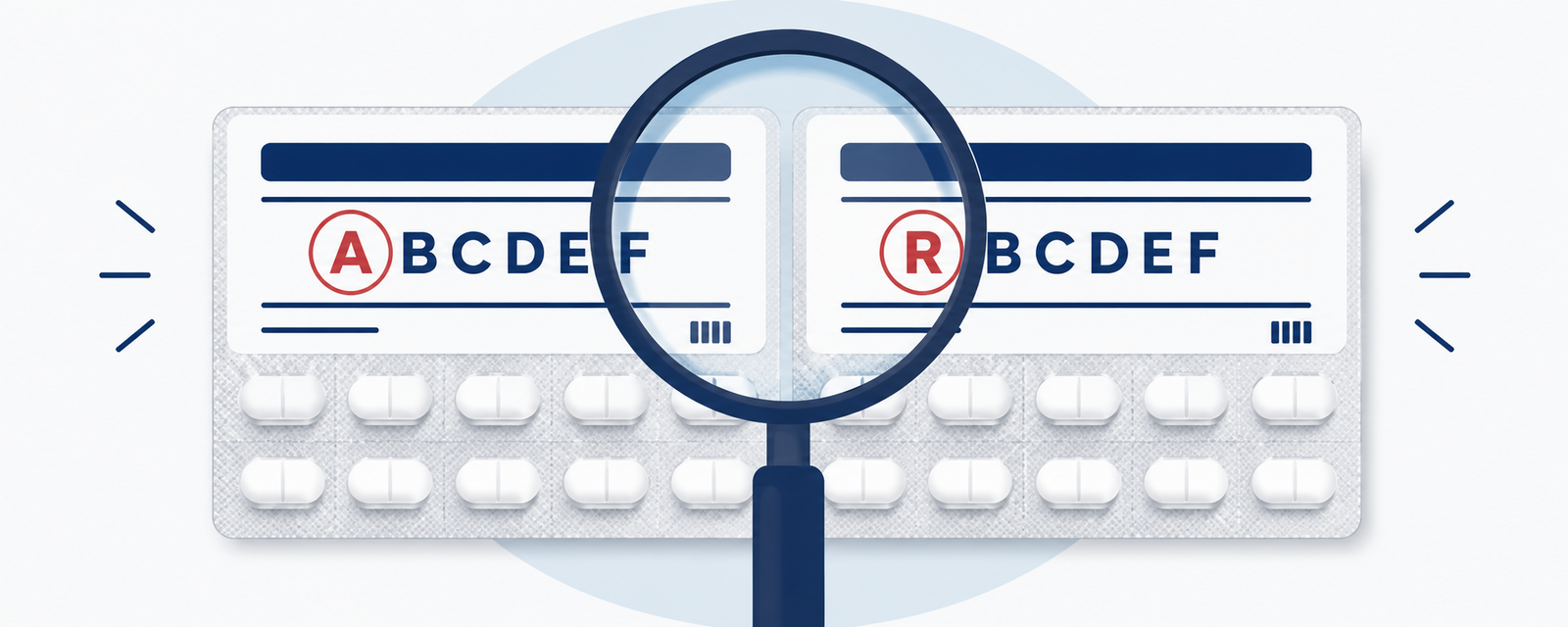
The Court’s starting point was simple: PLAVIX is a coined word with no dictionary meaning and no link to the drug’s active ingredient, so it qualifies for the highest tier of trademark protection available under Indian law. Set beside CLAVIX, the two names differ only in their first letter. Read aloud, written down, or half-remembered by a doctor scribbling a prescription, the Bench found the two virtually indistinguishable, and on that footing declared CLAVIX a deceptively similar trademark within the meaning of Section 2(1)(h) of the Trade Marks Act 1999. That finding drove the entire judgment.
Relying on the Supreme Court’s approach in Cadila Health Care v. Cadila Pharmaceuticals, the Bench held that when two pharmaceutical products share the same active ingredient and treat the same disease, the likelihood of confusion is at its highest, not diminished merely because doctors are trained professionals. Both PLAVIX and CLAVIX use Clopidogrel bisulphate for the same cardiovascular indication, and both are Schedule H prescription medicines. Intas argued that prescription-only status insulated it from a confusion finding. The Court disagreed, reasoning that misread handwriting, India’s linguistic diversity, and the life-threatening stakes of cardiac medication are precisely why courts hold pharmaceutical brand names to a stricter standard than an ordinary consumer product.
The PLAVIX CLAVIX Trademark Case: Background of an Eighteen-Year Dispute
Sanofi, the French pharmaceutical major, coined PLAVIX in 1995 for its anti-thrombosis drug. It filed the word mark in Class 5 on 20 January 1995, followed by a stylised device mark on 17 June 1998. PLAVIX reached world markets in 1998 and entered India in January 2003, going on to post billions of euros in global annual sales.
Intas Pharmaceuticals Ltd., an Ahmedabad-based company, launched CLAVIX in 2001 for the identical active ingredient and the same cardiovascular use, setting up what would become an eighteen-year pharmaceutical trademark infringement India dispute. Intas told the Court it had coined the name from “CL” for Clopidogrel, “AVI” for an alleged condition called “Atherosclerotic Vascular Incidences,” and “X” to signify reduced recurrence. Sanofi first learned of CLAVIX in mid-2005 and sued in 2008, initially as a passing-off action, later amended in September 2009 to add a claim of infringement once Intas applied to register CLAVIX in December 2007. Issues were framed in March 2010, evidence closed in April 2018, and final arguments concluded only in March 2026, judgment following weeks later on 28 April 2026.
Why a Mark-to-Mark Test Defeated the Packaging and Company-Name Defence
The PLAVIX CLAVIX trademark case turns on a distinction Indian courts draw sharply between an infringement action and a passing-off action. In infringement, once the essential features of a registered mark have been copied, differences in packaging, colour scheme, or the addition of a company name are treated as irrelevant; the comparison is mark to mark. In passing off, by contrast, that surrounding material can matter. The Delhi High Court applied this Division Bench principle from Wow Momo Foods v. Wow Burger to reject Intas’s argument that its own branding and get-up distinguished CLAVIX from PLAVIX in the marketplace. The Court also noted the irony that Intas had itself filed to register CLAVIX as a standalone word mark, undercutting any argument that surrounding material, rather than the word itself, carried the source-identifying function.
Intas separately leaned on the Gensol v. Mahindra line of reasoning, arguing that displaying its company name alongside CLAVIX would dispel confusion, the way a car buyer relies on the manufacturer’s badge. The Bench rejected the analogy outright: pharmaceutical buyers, unlike automobile buyers, do not anchor their purchase decision to the manufacturer’s corporate name, so the same logic could not carry over to a Section 29 dispute under the Trade Marks Act 1999.
The Device Mark Argument Under Section 17 of the Trade Marks Act 1999 Also Failed
Intas argued that Sanofi’s amended plaint asserted rights only in the stylised device mark, and that Section 17 of the Trade Marks Act 1999 limits protection to a composite mark taken as a whole, precluding standalone protection for the word PLAVIX. The Court held that the device mark is simply PLAVIX rendered in a particular typeface, containing no other word or device, so registering the label necessarily protects the word within it, consistent with United Biotech v. Orchid Chemicals. In any event, Sanofi’s separately registered word mark, in force since 20 January 1995, closed off the Section 17 argument independently.
Dishonest Adoption Sank the Prior-User Defence
Intas invoked Section 34 of the Trade Marks Act 1999, claiming status as a prior, bona fide user of CLAVIX from 2001, before PLAVIX’s commercial Indian launch in 2003. The Court rejected this on two independent grounds. First, on the facts: a registered proprietor can enforce its mark from the date of registration, not the date of commercial launch, so Sanofi’s 1995 and 1998 registration dates predated Intas’s 2001 adoption regardless of when PLAVIX physically reached Indian pharmacies. Second, on conduct: cross-examination showed that “Atherosclerotic Vascular Incidences” is not a recognised medical term, that Intas was already selling the same Clopidogrel formulation under two other brand names, and that no trademark search or market research preceded the CLAVIX launch. A witness admitted that a basic registry search in 2001 would have surfaced Sanofi’s pending applications. The Court held that a Section 34 defence is not available to a party whose adoption of a mark is tainted by dishonesty, and that the same dishonesty defeats any argument that Sanofi’s own delay in suing should bar relief. An earlier ad-interim order of the Punjab and Haryana High Court, which had found FLAVIX and CLAVIX dissimilar in a separate case, was distinguished on the basis that it involved a different passing-off dispute between different products at the interim stage, not a post-trial infringement finding between identical drugs.
The Passing-Off Claim That Did Not Survive
Not every part of Sanofi’s case succeeded, and the split outcome is itself instructive for anyone tracking this pharmaceutical trademark infringement India dispute. The passing-off claim, which does not depend on registration but requires proof of goodwill and reputation actually built up in India, failed. The Court found that global sales figures, undated promotional material, one journal article, and certificates from a handful of Indian doctors showed, at most, that a narrow slice of the medical community had heard of PLAVIX by July 2001, when Intas adopted CLAVIX. That falls short of the goodwill and reputation an Indian passing-off claim demands. Leading the world market, the Court clarified, does not automatically translate into an Indian reputation; a foreign pharmaceutical company must show a meaningful commercial presence within India at the relevant date. This part of the ruling is a useful reminder that a Section 29 finding of a deceptively similar trademark rests on registration, while passing off rests on proof that is considerably harder to gather years after the fact.
What This Trademark Infringement Delhi High Court Ruling Means for Founders, CAs, and Company Secretaries
For professionals advising on brand adoption, the PLAVIX CLAVIX trademark case carries several practical lessons that go well beyond the pharmaceutical sector, and beyond this one trademark infringement Delhi High Court ruling.
First, acceptance of a trademark application for advertisement by the Registry, or the absence of an objection at the examination stage, is not a green light. The Trade Marks Registry did not flag CLAVIX as conflicting with PLAVIX in 2007; the Delhi High Court still found a deceptively similar trademark two decades later, at a proper trial with full evidence. A clean registry search result is a starting point for clearance work, not the end of it.
Second, where the earlier mark is registered and the goods are identical, a single-letter, single-syllable, or prefix change rarely survives a mark-to-mark comparison, and rarely produces anything other than a deceptively similar trademark in the eyes of a court. Packaging, colour schemes, and even your own company name sitting next to the disputed mark generally will not rescue an infringement claim, even though the same features might carry more weight in a pure passing-off dispute.
Third, in sectors touching public health or consumer safety, courts apply a stricter confusion standard and will not assume that a professional or specialist audience filters out confusion on its own.
Fourth, document the trademark search and clearance process before adopting any name, including a check for pending applications and not only registered marks. Intas’s failure to search the register in 2001, and its own witness’s admission that a search would have surfaced Sanofi’s filings, became central to the finding of dishonest adoption a quarter-century later. A dated, saved search report is inexpensive insurance against exactly this outcome.
Fifth, keep infringement risk and passing-off risk analytically separate when advising a client. A registered proprietor need not prove market reputation to win an infringement claim; an unregistered claimant, or one relying on rights beyond its registration, must prove India-specific goodwill at the relevant date, and that evidentiary bar can defeat even a globally famous brand, as it did here for part of Sanofi’s case.
Twenty-five years after CLAVIX was first adopted, the outcome in this pharmaceutical trademark infringement India case turns on the same question that any name-clearance search is meant to answer at the outset: does the new mark, read as a whole by an ordinary buyer with an imperfect memory, land too close to something already on the register. A one-letter difference was never going to answer that question in Intas’s favour, and the Delhi High Court’s 28 April 2026 ruling leaves little room to argue otherwise the next time a deceptively similar trademark reaches an Indian courtroom.
Sources
Editorial note: This report is based on the Delhi High Court’s official cause list confirming the case number, parties, presiding judge, and date of pronouncement, corroborated by consistent case-law reporting from multiple independent legal publications. Readers relying on this analysis for a live matter should independently verify the operative order against the certified copy of the judgment (neutral citation 2026:DHC:3574) before citing it before any forum.