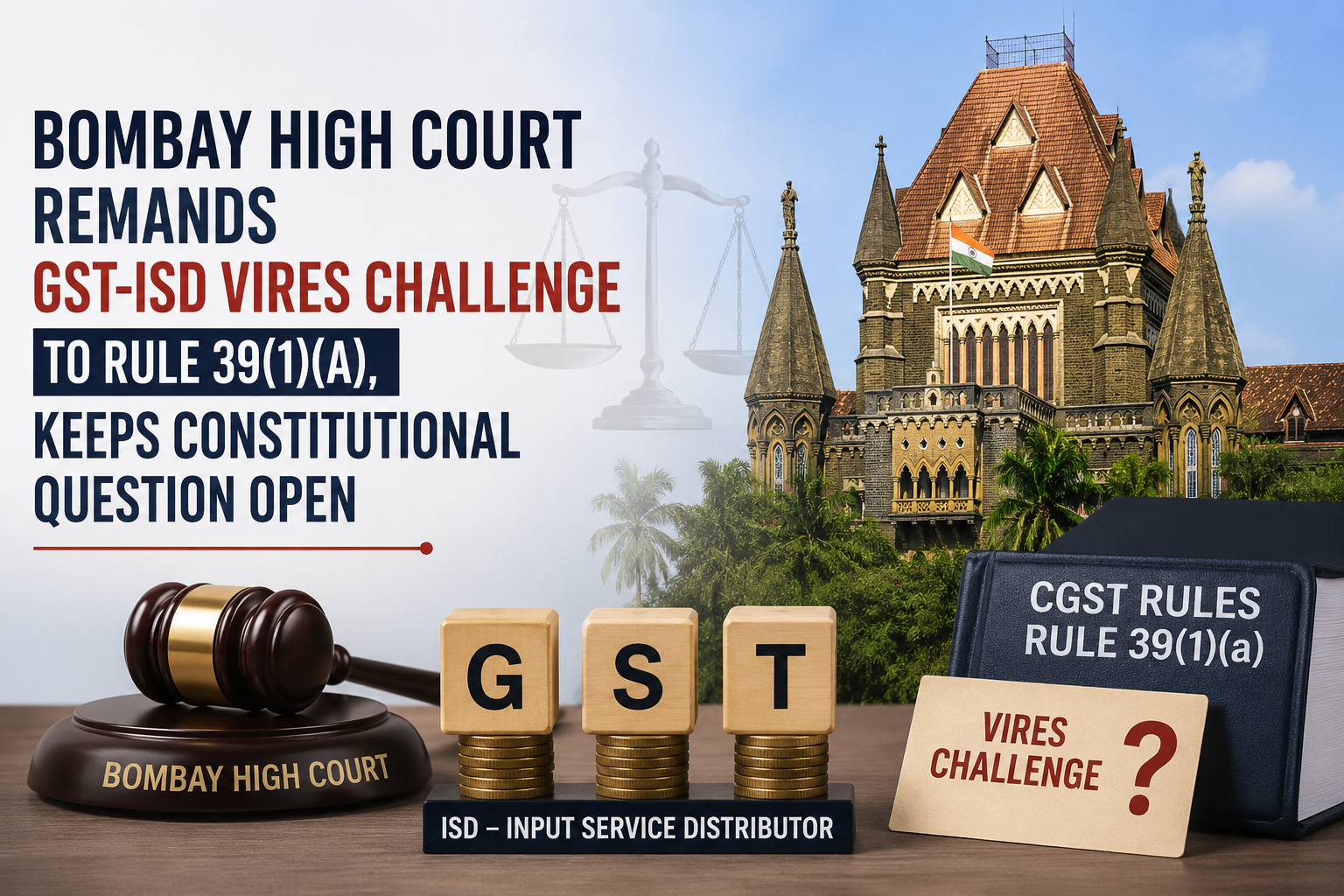
Manappuram Finance Ltd. v. Union of India & Ors. Writ Petition No. 17106 of 2024 | Bombay High Court | Coram: Suman Shyam & Advait M. Sethna, JJ. | Order dated 12 June 2026

Table of Contents
The Petition
Manappuram Finance Ltd. filed a writ petition under Article 226 of the Constitution challenging the vires and validity of Rule 39(1)(a) of the CGST Rules, 2017 — the provision governing the timeline for distribution of Input Tax Credit by an Input Service Distributor (ISD). The petition also assailed an order dated 29 April 2024 passed by the State Tax Officer, (Vashi-Turbhe-702), Raigad Division, Navi Mumbai.
Arguments Before the Court
Counsel for the petitioner submitted that no personal hearing had been granted before the impugned order was passed. The State’s counsel disputed this, contending that a hearing had in fact been afforded, as recorded in the order itself. The Bench did not adjudicate this dispute, noting only “Be that as it may” before moving to the next point.
Petitioner’s counsel further relied on two precedents, submitting that the issue raised in the petition would stand covered by them:
- Reliance Jio Infocomm Ltd. v. Union of India [(2026) 40 Centax 88 (Mad.)]
- Birlanu Ltd. v. Union of India [(2026) 38 Centax 172 (Telangana)]
The Court’s Order
Without expressing any view on the merits of either side’s contentions, the Bench:
- Quashed and set aside the impugned order dated 29 April 2024;
- Remanded the matter to the State Tax Officer, directing that the issues raised be reconsidered afresh, on merits and in accordance with law, in light of the two decisions cited above, with a reasoned order to follow;
- Kept open all contentions of the parties to be urged before the adjudicating authority afresh;
- Kept open the challenge to the constitutional validity of Rule 39(1)(a) itself, to be decided at an appropriate stage or proceeding when the occasion arises.
The Court was explicit that it had “not expressed any opinion on the merits of the rival contentions” — meaning this is a procedural remand, not a substantive ruling either way on the ISD credit-distribution issue.
Background Context (Not Part of This Order)
For context on the two precedents the petitioner invoked — independently verified, and not recited or adopted by the Bombay High Court in this order:
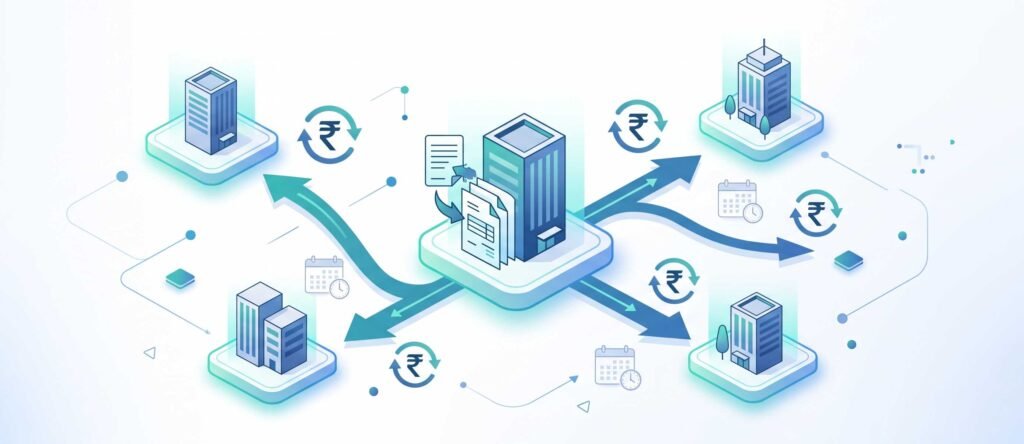
- Telangana HC (BirlaNu, decided 30.12.2025): Held that Rule 39(1)(a), to the extent it mandates same-month distribution of ITC by an ISD, is ultra vires Section 20 of the CGST Act as it stood prior to its amendment effective 1 April 2025, since Section 20 did not then authorise prescription of any time limit for distribution.
- Madras HC (Reliance Jio, decided 05.03.2026): Held that an ISD can distribute ITC only once it becomes legally available after fulfilment of the Section 16(2) eligibility conditions — not merely on receipt of the invoice. Notably, this ruling did not go so far as to strike down Rule 39(1)(a) as ultra vires; it read the rule down rather than invalidating it.
Note: The two High Courts have arrived at taxpayer-favourable outcomes via different legal routes — one on constitutional/ultra vires grounds, the other by interpretation of “availability” under Section 16(2). The Bombay High Court has not yet examined either line of reasoning on merits; the vires challenge to Rule 39(1)(a) remains undecided and open.
What Happens Next
The State Tax Officer, (Vashi-Turbhe-702), Raigad Division, Navi Mumbai, must now reconsider the matter afresh and pass a fresh reasoned order, taking into account the Madras and Telangana rulings, without prejudice to either party’s contentions. The larger constitutional question on Rule 39(1)(a)’s validity awaits a future proceeding.
This report is based strictly on the text of the Bombay High Court’s order dated 12 June 2026 in WP No. 17106 of 2024, supplemented only where separately indicated by independently sourced case law on the Reliance Jio and BirlaNu decisions.