India-US Trade Deal Close to Culmination, Says Goyal, as US Offers 17% Tariff Cap Instead of 25%
Piyush Goyal says the India-US trade deal is close to culmination, days after USTR proposed up to 25% tariffs on Indian goods, falling to 17% if a deal is reached. Comments are open until 5 January 2027.

The US has offered to cap tariffs on Indian goods at 17%, against a proposed rate of up to 25%, if the two countries close the India-US trade deal. On Friday, 27 November 2026, Commerce and Industry Minister Piyush Goyal said the agreement was “close to culmination”. For exporters, the higher rate remains a proposal, not a final order, and comments on it are open until 5 January 2027.
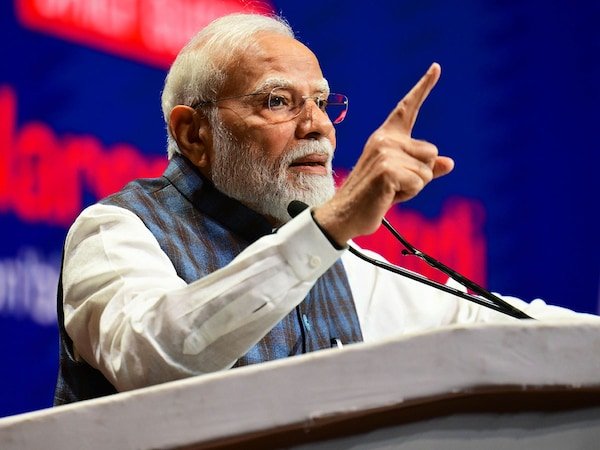
Goyal spoke virtually at the India Debt Capital Market Summit 2026, organised by Trust Group, Business Standard reported. He said the “process and pathway” that had held back the India-US trade deal was now taking shape. His remarks came two days after the Office of the US Trade Representative (USTR) issued its proposed tariff action against India.
India-US Trade Deal: The Tariff Rates on the Table
| Scenario | Tariff rate |
|---|---|
| Proposed rate on goods of India if no agreement is reached | Up to 25%, net of existing Section 301 tariffs |
| Rate USTR will consider if India reaches an Agreement on Reciprocal Trade | 17% |
| Rate set in the February 2026 joint statement on an interim agreement | 18% |
Source: USTR proposed action notice announced on 25 November 2026; the 18% figure as reported by Business Standard.
The USTR notice of determination and request for comments says the agency will consider “tariffs of up to 25 percent on all goods of India, net of existing Section 301 tariffs”. The 17% rate depends on India reaching an agreement that is “responsive to the determinations in this investigation”, according to the notice.
Business Standard reported that India’s proposed rate is the second-steepest among the economies facing the probe, and that the action covers 14 trading partners accused of structural excess capacity.
Why USTR Proposed 25% and What Has Held Back the India-US Trade Deal
USTR determined that India’s acts, policies and practices relating to structural excess capacity are unreasonable, burden or restrict US commerce, and are actionable under Section 301(b) of the Trade Act of 1974. The investigation began on 11 March 2026, and USTR held consultations with India on 14 May 2026.
The notice names five sets of practices:
- umbrella industrial policies, including Make in India, Production Linked Incentives, Atmanirbhar Bharat and the India Brand Equity Foundation;
- incentives and schemes that, in USTR’s view, foster overcapacity;
- inadequate labour laws, weak enforcement and poor labour conditions;
- financial repression;
- market access barriers, and sourcing upstream capital and intermediate goods from non-market economies.
[IMAGE 3 HERE: Solar panels and steel coils representing sectors named in the USTR notice]
The sectors named are steel, solar, health (including pharmaceuticals and active pharmaceutical ingredients) and information and communications technology.
India’s commerce ministry said it was examining the notice, Reuters reported. The ministry said it had told Washington during the investigation that India has no structural excess capacity in any sector, that it had engaged constructively, and that trade-related concerns should be addressed in the India-US trade deal talks.
The tariff terms have shifted since February. A February 2026 joint statement set an interim agreement and an 18% tariff rate, and the US Supreme Court later struck down tariffs imposed under the International Emergency Economic Powers Act (IEEPA), a US emergency-powers law, Business Standard reported.
Commerce Secretary Rajesh Agrawal said last week that talks on the first tranche were nearing conclusion, but that signing depends on the US finalising its new tariff framework and clarifying the Section 301 investigations, according to the same report.
What the Proposal Means for Indian Exporters
- Not yet in force: the 25% rate is a proposed action. USTR is taking written comments until 5 January 2027 before deciding.
- Broad coverage: the proposal covers all goods of India, with exemptions. These include articles already under Section 232 tariffs (aluminium, steel, copper and their derivatives; passenger vehicles, light trucks and parts; medium- and heavy-duty vehicles and parts; wood products; patented pharmaceuticals; semiconductors), books and other informational materials, donations, accompanied baggage, certain agglomerated iron ores, and products listed in Annex A, such as certain agricultural products, seeds, spices, fuels, chemicals and minerals.
- Not stacked on Section 301 duties: the rate is calculated net of existing Section 301 tariffs, and USTR will also consider adjustments for other Section 301 and Section 232 actions.
- 17% is conditional: the lower rate applies only if India reaches an Agreement on Reciprocal Trade that responds to the USTR findings.
- How to comment: written and rebuttal comments go to docket USTR-2026-0731, and requests to appear at the hearing go to docket USTR-2026-0741, through the USTR comments portal. No account is needed. Submissions must be in English, and business confidential information must be marked on each page and filed with a public version.
Dates to Watch Before the Tariff Is Finalised
The next fixed dates come from the USTR notice, not from the India-US trade deal talks. DBN’s market and economy desk earlier covered the Section 301 tariffs proposed on 14 economies including India.
- 5 January 2027: deadline for written comments, and for requests to appear with a summary of testimony.
- 25 January 2027: public hearings begin at 10:00 a.m. in the main hearing room of the US International Trade Commission, 500 E Street SW, Washington, DC. The notice says hearings may continue as needed.
Business Standard reported that no date was given for signing the India-US trade deal.
Frequently Asked Questions
Has the India-US trade deal been signed?
No. On 27 November 2026, Commerce Minister Piyush Goyal said the deal was close to culmination and that the pathway that had held it back was taking shape. No signing date was given. The Commerce Secretary has said signing depends on the US finalising its tariff framework and clarifying the Section 301 investigations.
Does the 25% US tariff on Indian goods apply now?
No. It is a proposed action under Section 301 of the US Trade Act of 1974. USTR is accepting written comments until 5 January 2027, and public hearings begin on 25 January 2027. Several categories, including goods already under Section 232 tariffs and products in Annex A, are exempt from the proposal.
Sources
- USTR: Notice of Determination and Request for Comments Concerning Proposed Action in the Section 301 Investigation of India
- Reuters (via News India Times): India-US trade deal is nearing completion, minister says
- Business Standard: India-US trade pact nears finish as pathway takes shape: Piyush Goyal
- Business Standard: US proposes up to 25% tariff on India, offers 17% upon trade deal
This article is for general information only and is not legal, tax or financial advice.
This story follows our editorial policy. Spotted an error? Tell us.