UK Benefits Portal Stays Offline After DWP Cyber Attack; Pension and Universal Credit Payments Continue
The UK Department for Work and Pensions confirmed on 28 November 2026 that a cyber attack, an attempt to gain unauthorised access, forced its online pension and benefit services offline. Regular payments continue.
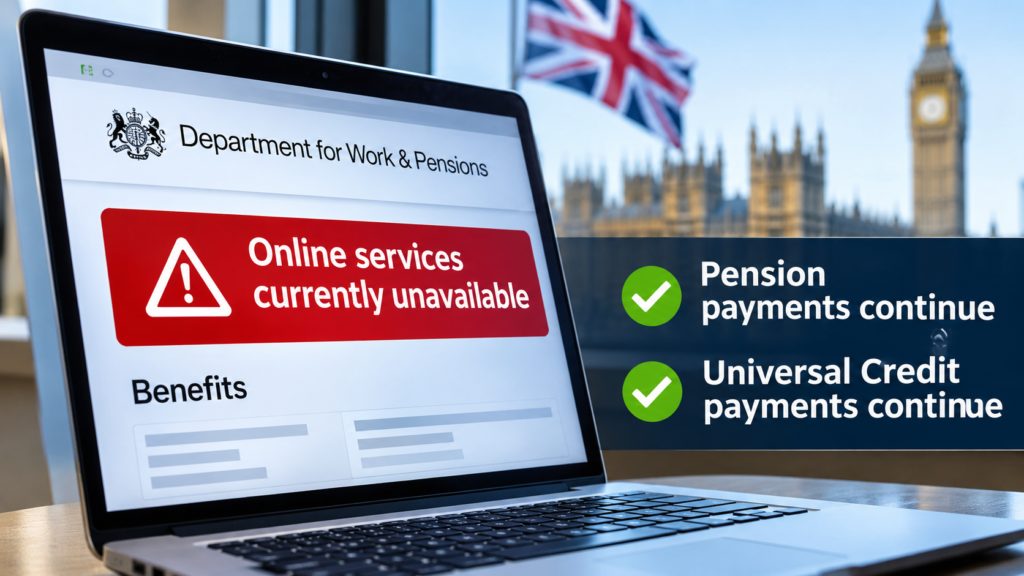
The UK Department for Work and Pensions (DWP) said on Saturday, 28 November 2026, that a DWP cyber attack was behind the shutdown of its online pension and benefit services. It is investigating “an attempt to gain unauthorised access to our systems”, its official notice says. Regular benefit and pension payments are still going out, but the online services stayed down into the weekend.
The department, which runs the state pension and universal credit, is working on the DWP cyber attack with the National Cyber Security Centre (NCSC) and the Government Cyber Coordination Centre, according to its updated notice on GOV.UK.
What the DWP has confirmed so far
The DWP’s notice, titled “Temporary disruption to some DWP online services”, first went up on 27 November and was revised on 28 November. The revised text calls the incident a cyber attack and says specialist experts are still investigating it.
“Alongside the National Cyber Security Centre and Government Cyber Coordination Centre, we are working to understand the cause of an attempt to gain unauthorised access to our systems. The DWP has well-rehearsed plans for these scenarios, which were immediately implemented.”
Department for Work and Pensions, GOV.UK notice, updated 28 November 2026
Pat McFadden, the minister in charge of the department, described the DWP cyber attack as an “unauthorised attempt to gain access to DWP systems”. He said there was no evidence that personal details had been compromised. Shutting the systems was the first step, he said, to protect the public and their data.
No group or country has been named as responsible for the DWP cyber attack. The department has not said how the attempt was made or which systems were reached. McFadden said he was alerted overnight between Thursday and Friday.
How the DWP cyber attack unfolded, day by day
The GOV.UK page keeps a public log of each change. Read together with statements from ministers and officials, it gives this sequence.
| Date (UK time) | Development | Source |
|---|---|---|
| Night of 26–27 November | McFadden is alerted to the incident | Pat McFadden, 28 November |
| 27 November | GOV.UK notice first published: DWP online services unavailable | GOV.UK update log |
| 27 November | Notice adds: call your usual benefit line for help; link to scam advice | GOV.UK update log |
| 27 November | Notice adds: no sanction for missed appointments or unreported changes during the outage | GOV.UK update log |
| 27 November | Downing Street says there is “currently no evidence” personal data was lost and no evidence other departments were targeted | Downing Street, 27 November |
| 28 November | Notice revised: the DWP cyber attack is confirmed as an attempt to gain unauthorised access | GOV.UK update log |
| 28 November | Online services still unavailable; no restoration date given | GOV.UK notice; McFadden |
Which services went offline
The DWP cyber attack hit the public-facing side of the department. By around midday GMT on Friday, 27 November, the online systems for state pensions, universal credit and Personal Independence Payment (PIP) applications could not be reached, the BBC reported. The “Tell Us Once” service, which people use to report a death to the government, was also unavailable.
Healthy Start is an NHS scheme that helps pregnant women and families with young children buy milk and fruit. Its online application route was also down, though a spokesperson for the scheme said payments were not interrupted.
Universal credit claimants also lost access to the online journal in which they record job searches, a condition of their benefit. The DWP has said no one will be penalised for that while the DWP cyber attack is dealt with.
Who is affected and who is not
The main point in the official notice is that money is still flowing. “We want to reassure customers that regular benefit and pension payments will continue to be paid as normal,” the DWP said. The table below sets out, from the notice and ministers’ statements, what the DWP cyber attack changes for each group.
| Group | Position as of 28 November | What the DWP says to do |
|---|---|---|
| People receiving regular benefits or pensions | Payments continue as normal | Contact the DWP in operating hours if a payment did not arrive |
| Universal credit claimants with work conditions | No sanction for missed attendance or changes not reported during the outage | Sanctions already processed still apply |
| New applicants (pension, PIP, universal credit) | Online applications unavailable | Call the usual benefit line for help |
| Families reporting a death | Tell Us Once online service unavailable | Use the phone line for the relevant service |
| Everyone dealing with the DWP | Higher risk of fake messages that pose as the department | Do not share bank or personal details sent for by text or email |
McFadden said payments are cleared several days in advance. So anyone whose payment did not arrive on Friday should not assume the DWP cyber attack was the cause, he said, and should contact the department to discuss it.
The Guardian, citing people inside the department, reported that the DWP makes about 2.5 million regular payments a day. The same report said manual payments, possibly tens of thousands of them, may have to be cleared over the weekend.
What ministers, opposition and experts have said
McFadden defended the decision to keep services down until they are checked.
“We will not put services back online until we have made sure that it’s safe to do so.”
Pat McFadden, Work and Pensions Secretary, 28 November 2026
On Friday he set out the order of work: take a system offline early, look for the cause, and keep public payments going in parallel.
Helen Whately, who shadows McFadden for the Conservatives, called the DWP cyber attack “extremely concerning” and said it “must be treated with the utmost seriousness”. She said the government must do more to guard against such attacks and make its systems resilient.
Chi Onwurah, a Labour MP and chair of the Commons committee on science and technology, said the incident should be a “wake-up call” for ministers and the wider public sector. According to Onwurah, her committee had warned more than once that public services cannot go digital safely without fixing weak infrastructure and poor data hygiene.
Before the DWP cyber attack was confirmed, David Knott, the UK government’s former chief technology officer, said his “strong suspicion” was that it was an attack, because the services taken down were the citizen-facing ones. The Information Commissioner’s Office, the UK data regulator, is talking to the department about the incident.
Why it matters beyond benefits
The DWP pays the state pension, universal credit and PIP, and the DWP cyber attack left millions of people without online access to those services. The attempt on its systems also comes during a run of cyber incidents at UK organisations.
- In November, several UK meat suppliers said their refrigeration units warmed overnight after hackers went after software that European supermarkets use.
- In recent weeks the retailers Next and Asos each reported that some data had been accessed without permission.
- This month the NCSC published a report urging organisations to strengthen their defences as attack tools grow more capable.
- In April 2025 the government said hackers had broken into online services run by the Legal Aid Agency and taken a large amount of personal data.
The response the department has described has four parts: take affected systems offline, keep regular payments going, warn customers that it will not ask for bank details by text or email, and restore online access only once it is checked. Each of these comes from the GOV.UK notice or from McFadden’s own statements on the DWP cyber attack.
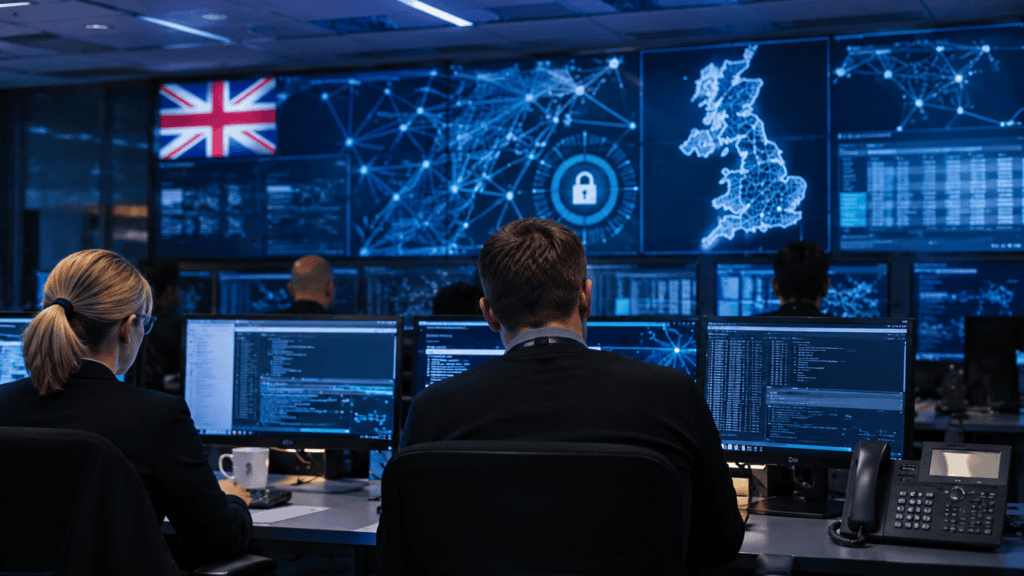
Scam warning for people waiting on the DWP
The DWP told customers to stay alert to scams and said it does not request personal or financial details by email or text. Lisa Webb, a lawyer at the consumer group Which?, told people to treat unexpected messages that claim to come from the DWP or a bank with suspicion.
Her advice was to end a doubtful conversation and call the organisation directly, for example on 159 to reach a bank’s fraud team. Fake messages that exploit the DWP cyber attack are the risk she highlighted.
What is still unknown about the DWP cyber attack
- When online services will return: the DWP and McFadden have given no date, only “as soon as possible”.
- Who was behind the DWP cyber attack and how the attempt was made.
- Whether any data was accessed: officials say there is no evidence of it so far, and the investigation is continuing.
- How large the manual payment backlog is, and whether it clears before the new week.
- Whether the Information Commissioner’s Office will open a formal inquiry beyond its current contact with the department.
Sources
- GOV.UK: Temporary disruption to some DWP online services (published 27 November, updated 28 November 2026)
- BBC News, 28 November 2026: statements by Pat McFadden and expert comment
More from the region: Europe business news and World Business News.
Information current as of 29 November 2026, from the official sources cited. Not intended as legal, tax or investment advice.
This story follows our editorial policy. Spotted an error? Tell us.