Argentina Fails to Stop Falklands Sea Lion Oil Project as Law of the Sea Tribunal Rules 18 Votes to 3
The International Tribunal for the Law of the Sea rejected Argentina's request to halt the Sea Lion oil project off the Falklands on 28 November 2026, finding the case turns on sovereignty. Drilling cannot start before 21 March 2027.
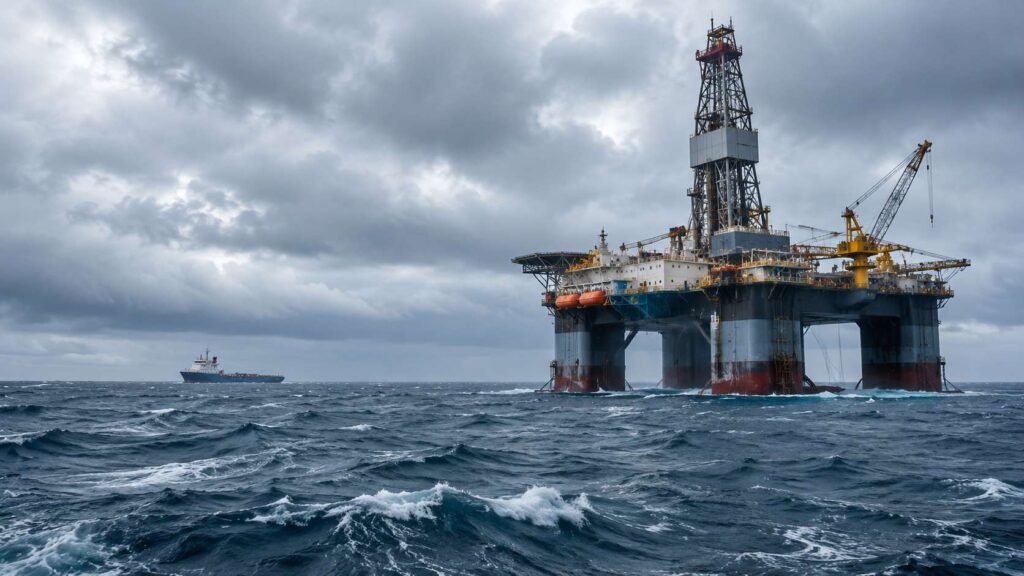
The International Tribunal for the Law of the Sea (ITLOS) on Saturday, 28 November 2026, rejected Argentina’s request to halt Falklands oil drilling at the Sea Lion field, ruling by 18 votes to 3 that the case appears to turn on sovereignty over the islands, which falls outside the law-of-the-sea convention. The order clears the way for the Navitas-Rockhopper project to keep preparing for first drilling, which the UK told the tribunal will not start before 21 March 2027.
Britain welcomed the order and urged Argentina to end what it called “wider economic pressure” on the islands. Argentina’s presidency said the ruling was not the final word and announced new sanctions proceedings against five entities.
The order in one paragraph
Argentina asked the Hamburg-based tribunal for provisional measures to stop Falklands oil drilling and new production infrastructure at Sea Lion while a full arbitration is set up.
The tribunal held that the provisions Argentina relied on “do not appear prima facie to afford a basis for the jurisdiction” of the arbitral tribunal, because deciding its claims would first require deciding who has sovereignty over the Falkland Islands (Malvinas). Having found no prima facie jurisdiction, it did not examine urgency or the other conditions, and rejected the request.
What Argentina asked for, and what it got
| Argentina’s request (11 November 2026) | Outcome |
|---|---|
| No new drilling for exploitation and no production infrastructure at Sea Lion | Rejected |
| UK not to use exploration data from the disputed areas against Argentina’s rights | Rejected |
| UK to stop preventing Argentina from protecting the marine environment there | Rejected |
| UK to avoid steps that aggravate the dispute, including new exploitation licences | Rejected, but the tribunal recorded the UK’s statement that no further licences will be granted while the licensing regime is suspended |

Why the tribunal said no to halting Falklands oil drilling
The key finding on Falklands oil drilling is short. In the tribunal’s words, a dispute that “requires the determination of a question of territorial sovereignty” cannot be treated as one about interpreting or applying the UN Convention on the Law of the Sea (UNCLOS). It then tested each of Argentina’s four claims against that rule.
- First claim (sovereign rights over the sea areas): needs the tribunal to identify which state is sovereign over the islands, so it falls outside UNCLOS.
- Second claim (no unilateral exploitation of disputed resources): the articles cited concern overlapping maritime boundaries pending delimitation, and the claim again presupposes a sovereignty decision.
- Third claim (marine environment): deciding it would first require deciding which party is the coastal state in those waters.
- Fourth claim (not aggravating the dispute, good faith): those provisions cannot stand alone as a basis for jurisdiction.
“a dispute, which requires the determination of a question of territorial sovereignty, may not be regarded as a dispute concerning the interpretation or application of the Convention under article 288, paragraph 1, of the Convention”
ITLOS Order of 28 November 2026, paragraph 60, as summarised in ITLOS/Press 406
Timeline of the Sea Lion dispute
Every date below comes from the tribunal’s own press release, which sets out the path from investment decision to the earliest possible Falklands oil drilling.
| Date | Development | Source |
|---|---|---|
| 10 December 2025 | Rockhopper and Navitas take the final investment decision on Sea Lion | ITLOS press release |
| 24 August 2026 | The partners say works are on plan for drilling in early 2027 and first oil in the first quarter of 2028 | ITLOS press release |
| 28 September 2026 | Argentina starts arbitration against the UK under Annex VII of UNCLOS | ITLOS press release |
| 13 October 2026 | Argentina asks ITLOS for provisional measures | ITLOS press release |
| 10–11 November 2026 | Public hearings in Hamburg | ITLOS press release |
| 28 November 2026 | ITLOS rejects the request, 18 votes to 3 | ITLOS press release |
| Not before 21 March 2027 | Earliest drilling, per the UK’s assurance to the tribunal | ITLOS press release |
| Not before March 2028 | Earliest extraction, per the same assurance | ITLOS press release |
What it means for the project, investors and the islands
The order removes the immediate legal threat to Falklands oil drilling but does not settle the underlying dispute over the islands. Based on the order and the parties’ statements:
| Who | What changes |
|---|---|
| Navitas (65% and operator) and Rockhopper (35%) | No court-ordered pause; preparations for Falklands oil drilling can continue on the schedule the UK described, with drilling no earlier than 21 March 2027 |
| Falkland Islands government | Its approved development plan for the field stands; the UK says no further licences will be granted while licensing is suspended |
| Companies working on Falklands oil | Still exposed to Argentine sanctions on firms linked to Falklands oil drilling; the presidency said proceedings opened against five more entities |
| Argentina | The main arbitration continues; the tribunal urged both sides to help set up the arbitral panel quickly |
The Falklands government sees Sea Lion, and the Falklands oil drilling it involves, as a way to secure the territory’s finances. The project could double the islands’ GDP and add a cumulative £8 billion over its life, with production running for about 35 years, The Guardian reported.
A Navitas spokesperson welcomed the decision “to reject all of Argentina’s requests for provisional measures” and said the company remains focused on developing Sea Lion under licences issued by the Falkland Islands government.
What London and Buenos Aires said
In a joint statement on GOV.UK, Foreign Secretary Ed Miliband and Attorney General Ellie Reeves described the outcome as vindicating the UK’s legal strategy, and restated that Britain has “no doubt” about its sovereignty over the islands. The statement itself does not mention drilling or licences.
“We now call on Argentina to respect the right of the Falkland Islanders to determine their own future and urge Argentina to end its wider economic pressure against the Falkland Islands.”
Ed Miliband and Ellie Reeves, joint statement, 28 November 2026
Argentina still opposes Falklands oil drilling. A spokesperson for its president, Javier Milei, said the ruling “in no way legitimises the unilateral exploitation of our natural resources” and that the government would keep taking “all necessary actions” to prevent it. The spokesperson said new sanctions proceedings had been started the day before against five entities.

What happens next for Falklands oil drilling
- An arbitral tribunal under Annex VII of UNCLOS still has to be formed and will hear the substance of Argentina’s case; ITLOS encouraged both sides to cooperate in setting it up swiftly.
- Whether that tribunal accepts jurisdiction is open; ITLOS’s finding was prima facie only.
- Drilling cannot start before 21 March 2027, and extraction not before March 2028, under the UK’s recorded assurances.
- Argentina’s sanctions on companies involved in Falklands oil drilling remain in force and are being extended.
- Any new licences: the UK told the tribunal none will be granted while the licensing regime is suspended, which limits Falklands oil drilling to the existing Sea Lion plan for now.
Sources
- ITLOS/Press 406: Tribunal renders its Order in the Case concerning hydrocarbon exploitation in the South-West Atlantic Ocean (Argentina v. United Kingdom), 28 November 2026
- GOV.UK: Joint statement on the Falkland Islands from the Foreign Secretary and Attorney General, 28 November 2026
- The Guardian, 28 November 2026: project economics and Argentine and Navitas statements
More from the region: Europe business news and World Business News.
Based on official documents and statements available up to 29 November 2026. ITLOS press releases are not official documents of the tribunal. Not legal or investment advice.
This story follows our editorial policy. Spotted an error? Tell us.